Comparative Analysis of The Venetian Resort Las Vegas and Global Venetian-Themed Hotels
1/7/2026 Quade
Quade
QuadeThis article provides a comprehensive comparative analysis of The Venetian Resort Las Vegas and other hotels worldwide under the Venetian brand or those significantly themed after Venice. The analysis covers key aspects such as architectural design and thematic execution, scale of operations, luxury amenities, entertainment options, culinary diversity, ownership, operational philosophies, and market positioning. The Venetian Resort Las Vegas is evaluated against major counterparts like The Venetian Macao and various Venice-inspired properties across the globe.
The "Venetian" brand has achieved global recognition through its ambitious recreations of Venice’s famed architecture and ambiance. Properties such as The Venetian Resort Las Vegas and The Venetian Macao stand as flagship examples, drawing inspiration from the grandeur and romance of the Italian city. Other hotels and resorts globally also incorporate Venetian themes, though generally on a smaller scale or with less immersive execution.
Architectural Design and Thematic Execution
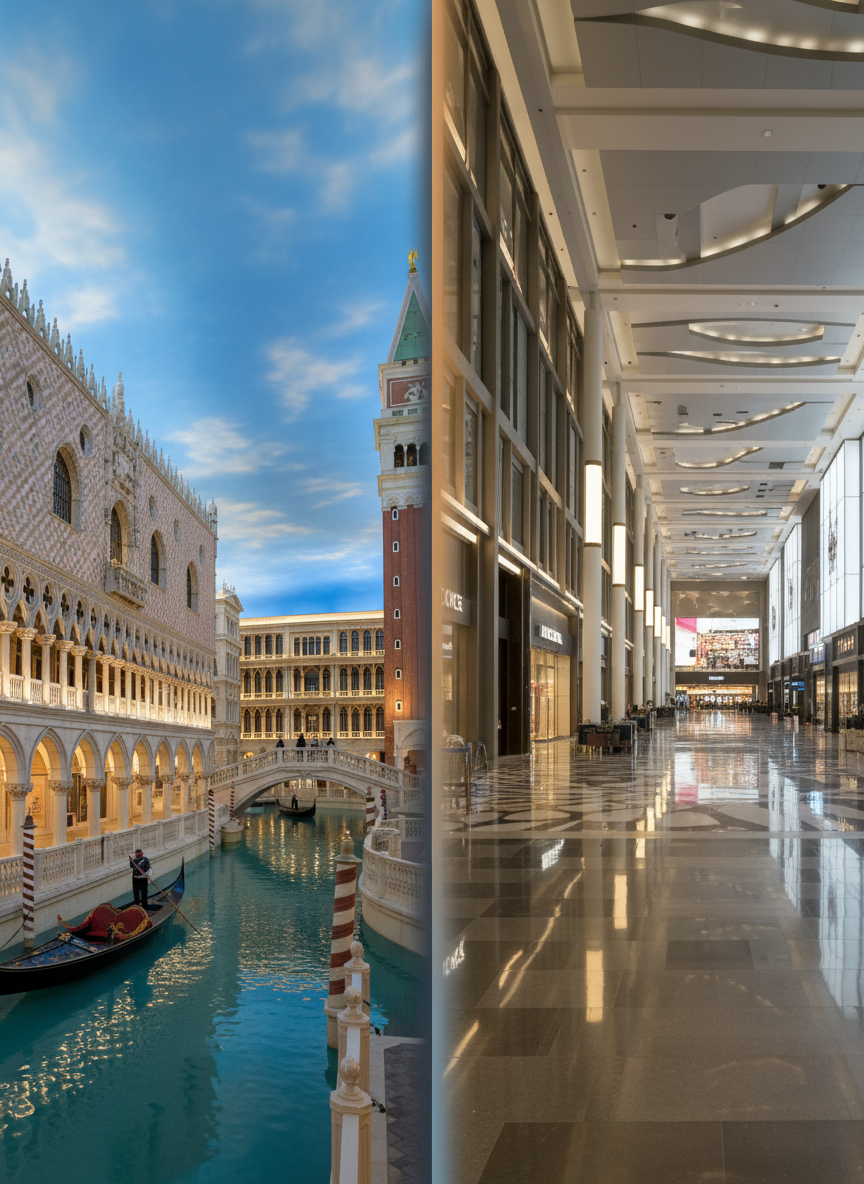
The Venetian Resort Las Vegas is renowned for its expansive and faithful replication of Venice’s architectural icons. The property features life-size reconstructions of landmarks such as St. Mark’s Campanile, the Rialto Bridge, the Doge's Palace, and canals encircled by gondolas. The design philosophy is defined by a hyper-realistic and immersive approach, utilizing extensive Italian marble, costumed gondoliers, and frescoed ceilings. The Venetian theme permeates every aspect of the establishment, from suites and casinos to shopping arcades and conference centers, including its integrated Palazzo tower.
In contrast, The Venetian Macao, while surpassing its Las Vegas counterpart in total floor area, presents a more stylized and functional interpretation. The property incorporates detailed Venetian motifs and replica canals primarily within its retail and entertainment zones, while the guest and conference areas adhere to a more modern aesthetic. The emphasis on monumental scale is evident, but the thematic execution is less meticulously authentic than in Las Vegas.
Other Venice-themed properties, such as those in Dubai, Seoul, and various Asian tourist centers, often adapt select Venetian motifs to suit local architectural preferences. Such properties usually feature superficial decorative elements—columns, bridges, and painted ceilings—most commonly restricted to lobbies, dining spaces, or event halls. Full-scale, immersive integration of Venetian themes is rarely achieved outside the flagship resorts.
Scale of Operations
The Venetian Resort Las Vegas, with 7,092 rooms when combined with the Palazzo tower, stands as the largest all-suite hotel in the United States and one of the leading convention and entertainment venues. Its casino encompasses approximately 120,000 square feet. The Venetian Macao, offering 2,905 rooms and the world’s largest gaming floor at around 546,000 square feet, is oriented toward Asian and international gamblers as well as business travelers. Boutique-scale hotels in other regions typically offer between 200 and 600 rooms and often operate without a casino, with limited Venetian theming in public spaces.
Luxury Amenities, Entertainment, and Culinary Diversity
The Venetian Resort Las Vegas is characterized by comprehensive luxury amenities, including an extensive spa complex, multiple themed pool decks, wellness centers, and suite-only accommodations. Entertainment is a focal point, featuring resident shows, musical performances, nightclubs such as TAO, art installations, and gondola rides. The Grand Canal Shoppes host over 200 retail and dining outlets, with a significant presence of celebrity chefs. The casino provides a broad array of gaming options, and the integrated convention center is among the largest in North America.
In The Venetian Macao, shopping and gaming are central attractions, supplemented by an arena capable of hosting major concerts and sporting events. The dining portfolio emphasizes both Asian and international cuisine, including venues helmed by celebrity chefs. While entertainment offerings exist, there are comparatively fewer resident shows than in Las Vegas.
Elsewhere, Venice-themed hotels typically provide amenities such as Venetian-style lounges, spas, and event spaces, but seldom approach the variety or scale of Las Vegas or Macao. Entertainment and culinary options are oriented toward local preferences and are rarely internationally renowned.
Ownership, Operational Philosophies, and Target Demographics
Both The Venetian Resort Las Vegas and The Venetian Macao originated under the ownership of Las Vegas Sands Corporation. Both properties emphasize luxury, comprehensive guest experiences, and significant marketing reach. The Las Vegas property primarily targets North American and international luxury travelers, convention attendees, and high-stakes gamblers, while the Macao property is geared toward Asian gamblers, the meetings, incentives, conventions, and exhibitions (MICE) market, tourists, and family vacationers.
By contrast, independently owned Venice-themed hotels or those operated by local chains adapt service models to fit regional market demands. Such properties often forgo large-scale gaming and conventions, focusing instead on the luxury urban travel segment or couples seeking a romantic, European-themed experience.
Iconic Status, Market Positioning, and Unique Elements
The Venetian Resort Las Vegas distinguishes itself through its scale, offering the world’s largest collection of all-suite accommodations blended with personalized luxury. Its thematic execution is regarded as the most immersive recreation of Venice’s artistry and romance outside Europe. The property’s extensive and diverse entertainment offerings, coupled with an expansive culinary scene highlighted by collaborations with celebrity chefs, reinforce its preeminent market position. Its convention facilities solidify its importance as a business and events hub.
While properties worldwide pay homage to Venice in architecture and ambiance, only the Las Vegas flagship achieves a comprehensive, unified, and theatrically immersive experience. The property sets a benchmark in themed hospitality, seamlessly blending architecture, entertainment, dining, shopping, and corporate services under a single, coherent vision. As a result, it holds an iconic status in global hospitality as the most ambitious and impactful realization of Venice outside its native context.
In summary, The Venetian Resort Las Vegas stands apart from other properties bearing the Venetian name or imagery, offering unmatched scale, thematic immersion, and a breadth of luxury experiences that collectively define its place as a gold standard in themed resorts.




![🚨PromptShare🚨
Glowing portrait Prompt
PROMPT
Advertisement for [character with face lit by a unique, story-driven light effect tied to their identity],
creating a hologram effect. 80s-style poster aesthetic, glowing light emanating against a dark background. the photograph](https://pbs.twimg.com/media/HE6eu1nWUAAsDVm.jpg)
