Between Heritage and High-Rises: The Transformation of Adh Dhahi Al Gharbi Street in Buraydah
2/4/2026 OSpark
The article examines the social and cultural tensions surrounding the rapid urban transformation of Adh Dhahi Al Gharbi Street in Buraydah. It contrasts traditional community life, local food culture, and historic marketplaces with the recent spread of modern cafés, apartment towers, and commercial development. The piece reflects residents’ concerns about rising rents, the loss of playgrounds and old souks, declining face‑to‑face interaction, and the perceived erosion of local identity under broader modernization efforts associated with Vision 2030.
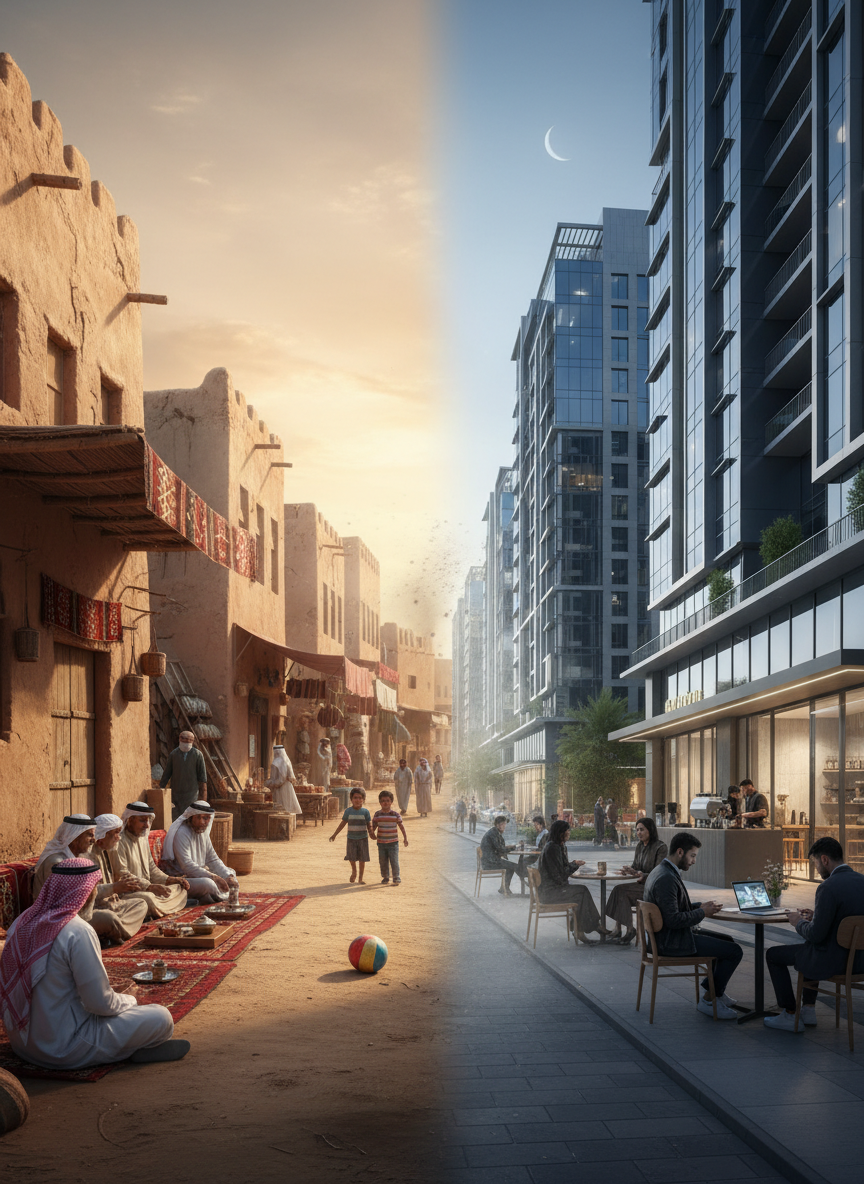
Adh Dhahi Al Gharbi Street in Buraydah has become a focal point for a wider debate about modernization, urban development, and cultural continuity. Once characterized by tightly knit neighborhoods, traditional public spaces, and long‑standing social practices, the street is increasingly marked by rapid commercial growth and contemporary architectural projects. This transformation has raised questions about how progress should be defined and at what cultural cost it is being pursued.
One of the most visible indicators of change along the street is the proliferation of modern coffee shops. These establishments, often designed to be visually appealing and highly shareable on social media platforms, have begun to dominate the commercial landscape. In their place, many residents recall an earlier era in which local culinary traditions, such as grandmothers’ desertside recipes and the pervasive aroma of home‑cooked dishes like kabsa, played a central role in daily life and community identity.
The evolution of social spaces is another major concern. Traditional Friday evening majlis gatherings, once central to neighborhood cohesion and intergenerational communication, are perceived as being overshadowed by individualistic café culture. In these new venues, digital engagement is often prioritized over direct interaction, contributing to a sense that shared public life is becoming increasingly fragmented. This shift raises questions about the long‑term effects on social bonds and communal solidarity.
Physical development along Adh Dhahi Al Gharbi has also altered the urban fabric. Shiny new apartment buildings and commercial towers symbolize investment, economic opportunity, and alignment with national development strategies. However, their emergence is frequently associated with the disappearance of playgrounds, open spaces, and traditional souks. These older spaces historically provided accessible areas for children’s play, informal gatherings, and local commerce rooted in longstanding practices.
The economic implications of this transformation are commonly framed around the relationship between rising rents and the perceived decline of local culture. As property values and rental rates increase, there is concern that long‑time residents and small, heritage‑based businesses may be displaced. This trend fuels criticism that modernization, under the umbrella of Vision 2030 and similar initiatives, risks privileging commercial aesthetics and profitability over cultural preservation and social inclusiveness.
Debate over Adh Dhahi Al Gharbi Street often centers on whether the current trajectory is producing a genuinely improved quality of life or merely replicating the urban models of larger cities such as Riyadh. Supporters of rapid development point to new services, infrastructure upgrades, and the integration of the area into broader economic and tourism strategies. Critics, however, argue that an overemphasis on “Instagrammable” spaces and standardized commercial formats undermines what made the street distinctive in the first place.
At the core of this discussion lies the question of identity. For many residents, Adh Dhahi Al Gharbi is not viewed simply as a traffic corridor or commercial zone, but as a repository of collective memory, shared customs, and everyday practices that define belonging. The perceived erosion of traditional food culture, neighborhood gatherings, and historic markets is therefore interpreted as a deeper loss that extends beyond aesthetics and convenience.
The tensions surrounding the street’s transformation illustrate a broader national and global challenge: how to reconcile ambitious modernization with the protection and renewal of local heritage. Adh Dhahi Al Gharbi has thus become a symbolic battleground between heritage and high‑rises, where questions of culture, economy, and urban form intersect. The outcome of this ongoing negotiation will significantly influence not only the future appearance of the street, but also the cultural narrative that Buraydah projects in the years to come.
In this context, calls for public dialogue, inclusive planning, and balanced policy are increasingly prominent. Advocates of a more measured approach emphasize the possibility of development models that integrate contemporary architecture and amenities with the preservation of traditional spaces and practices. The case of Adh Dhahi Al Gharbi highlights the urgency of such conversations for communities seeking both modern opportunity and the safeguarding of what they regard as an irreplaceable local identity.



![🚨PromptShare🚨
Glowing portrait Prompt
PROMPT
Advertisement for [character with face lit by a unique, story-driven light effect tied to their identity],
creating a hologram effect. 80s-style poster aesthetic, glowing light emanating against a dark background. the photograph](https://pbs.twimg.com/media/HE6eu1nWUAAsDVm.jpg)
