King Fahd District: Emerging Urban Hub or Overhyped Locale?
1/21/2026 OSpark
OSparkKing Fahd District in Riyadh, particularly around Hisham Bin Abdulmelk Street, has recently gained prominence for its vibrant urban life, offering a multitude of amenities such as coffee shops, events, and parks. While the area is lauded for its dynamic atmosphere and cultural development, concerns have emerged regarding increasing rents, parking shortages, and the rapid transformation of the neighborhood's traditional character. The district is at the center of a debate regarding its authenticity and accessibility for local residents amid changing urban dynamics driven by social media attention.
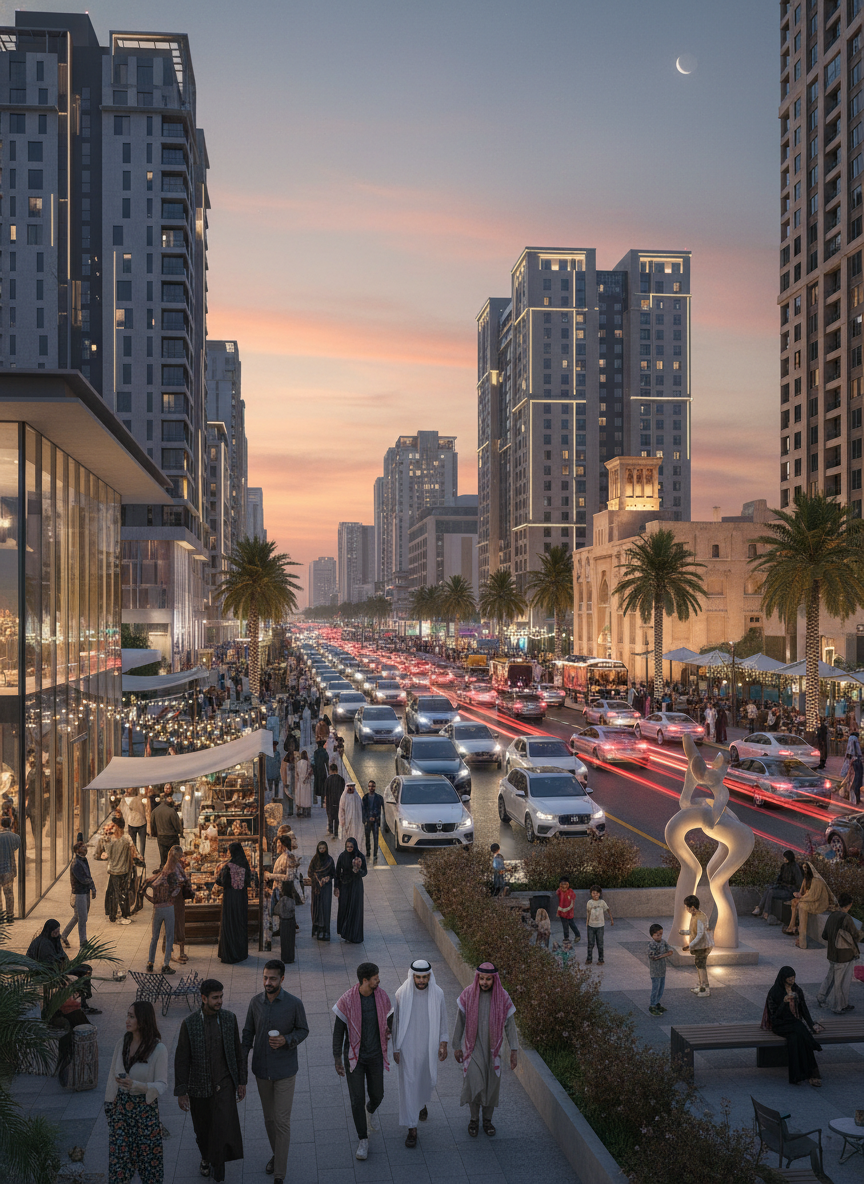
King Fahd District in Riyadh, especially along Hisham Bin Abdulmelk Street, has witnessed significant development and increased attention in recent years. The district has established itself as a focal point for urban activity, attracting residents and visitors with its numerous contemporary amenities.
The area is characterized by a proliferation of coffee shops, pop-up events, and family-friendly parks, contributing to its reputation as a modern lifestyle destination. Frequent restaurant openings often lead to substantial traffic congestion, particularly during peak hours, highlighting the district's popularity and capacity to draw large crowds. This surge in commercial activity is perceived as a sign of Riyadh's ongoing cultural and social transformation, with King Fahd District serving as a visible example of these broader trends.
However, certain challenges have accompanied this rapid growth. Increasing demand has led to a noticeable rise in rent prices, making housing in the district less accessible for some residents. Parking shortages are a common concern, especially in areas surrounding popular venues. These issues have prompted discussions about the balance between urban development and the preservation of community character.
Long-term residents express pride in the district's evolution and its current role as a center for social engagement. Streets are often filled with individuals enjoying public spaces and engaging in cultural activities, underscoring a perceived vibrancy in daily life. Nonetheless, questions have arisen regarding the pace of change and whether the neighborhood's original charm is being overshadowed by trends driven by social media and influencer culture.
The debate continues as to whether King Fahd District remains anchored in its local heritage or if it is evolving into an environment shaped primarily by external perceptions and digital trends. As Riyadh progresses, King Fahd District exemplifies the complex interplay between tradition, modernization, and the influences of a rapidly changing urban landscape.



![🚨PromptShare🚨
Glowing portrait Prompt
PROMPT
Advertisement for [character with face lit by a unique, story-driven light effect tied to their identity],
creating a hologram effect. 80s-style poster aesthetic, glowing light emanating against a dark background. the photograph](https://pbs.twimg.com/media/HE6eu1nWUAAsDVm.jpg)
