Ksar El Majaz Between Heritage and Marginalization
1/25/2026 OSpark
OSparkThe article examines Ksar El Majaz as a community torn between strong attachment to tradition and a pressing need for modernization. It highlights deteriorating infrastructure, inadequate waste management, and high unemployment among youth, contrasting these issues with the prevalence of lavish celebrations and pride in cultural heritage. The text questions whether the situation reflects authentic preservation of Moroccan traditions or a form of social and institutional neglect, and calls for a vision that reconciles cultural identity with economic development and improved public spaces.
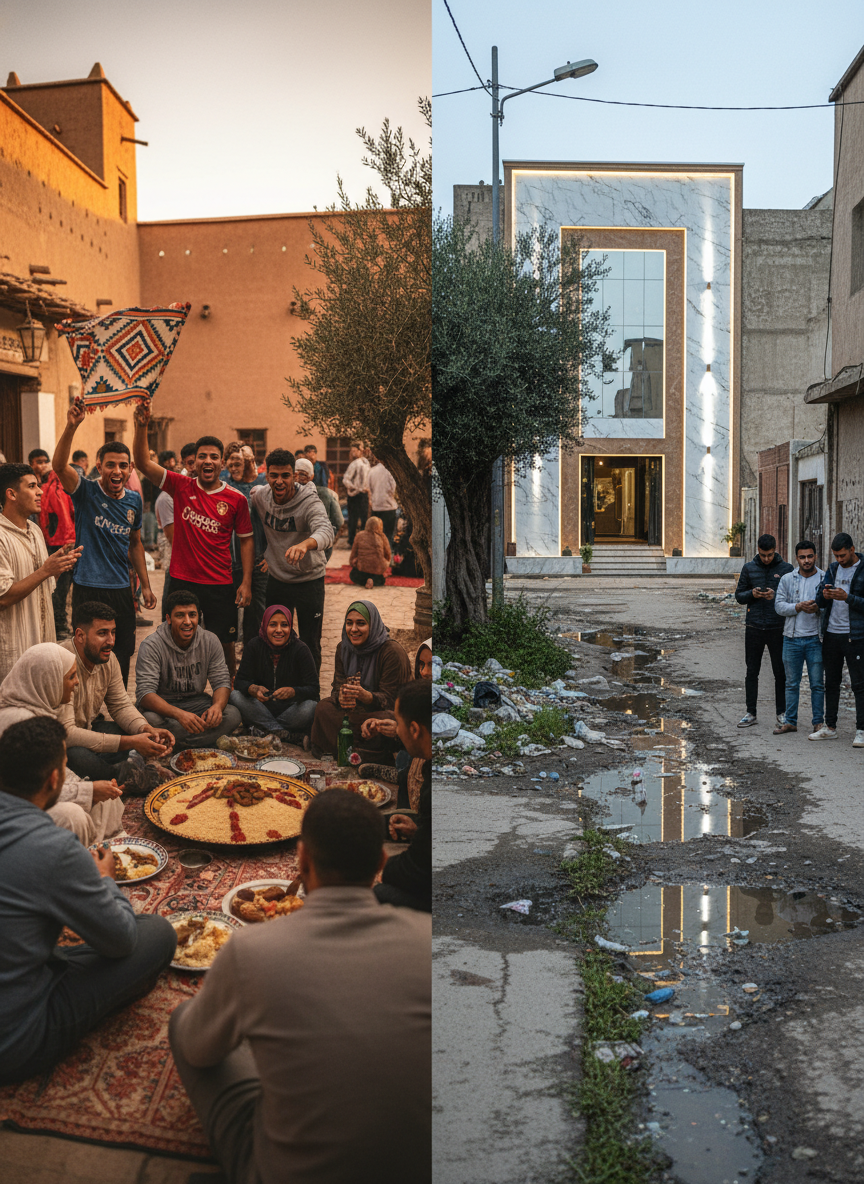
Ksar El Majaz is frequently portrayed as a close-knit community in which social bonds remain strong and shared customs retain a central place in daily life. Traditional dishes such as couscous, enthusiasm for the national football team, and communal gatherings reinforce a sense of belonging and continuity with the past. This cultural vitality forms an essential part of the locality’s identity and collective memory.
At the same time, visible signs of material decline contrast sharply with this social richness. Streets are described as deteriorating, with damaged road surfaces and inadequate maintenance. Waste accumulation and insufficient cleanliness in public areas create an environment that does not reflect the pride residents feel in their heritage. The coexistence of strong cultural attachment and neglected urban infrastructure reveals a significant imbalance between symbolic identity and practical living conditions.
Another striking contrast lies in the prominence of large social events, such as frequent celebrations in modern and well-equipped wedding halls. These festive occasions often display a high level of organization and investment, suggesting both social cohesion and a desire for prestige. However, this focus on ceremonial spaces does not always extend to everyday public infrastructure, where basic needs such as road repair, lighting, and waste management appear to receive less attention.
The situation of local youth represents a central concern. Young people are characterized as talented, ambitious, and full of energy, particularly visible in sports activities such as football, where community support is strong. Despite this potential, employment opportunities remain scarce. High unemployment and underemployment produce frustration and a sense of stagnation, as aspirations for a better future confront limited economic realities and a lack of structured professional pathways.
This tension gives rise to a broader question about the meaning of tradition in Ksar El Majaz. On one side, references to the “old Moroccan way” underscore an enduring respect for inherited customs and social models rooted in solidarity and family ties. On the other side, unresolved problems in infrastructure, public hygiene, and job creation raise doubts about whether the invocation of tradition serves, in some cases, as a pretext for inaction or resignation in the face of change.
Simultaneously, the population expresses a clear desire for progress and modernization. Aspirations include the development of contemporary cafés, clean and well-maintained public spaces, and the creation of real economic opportunities that would enable residents, and particularly youth, to build stable and dignified lives. This vision does not necessarily imply abandoning heritage; rather, it seeks to integrate cultural identity into a more dynamic and forward-looking local development strategy.
The core dilemma facing Ksar El Majaz can therefore be summarized as a struggle between nostalgia and the future. The community appears both proud of its resilience and social cohesion, and at risk of being left behind by broader regional and national transformations. The unresolved question is whether the locality will remain primarily a symbol of survival and attachment to the past, or whether it will succeed in translating its cultural capital into improved infrastructure, better governance, and inclusive economic growth.
In this context, the debate surrounding Ksar El Majaz concerns more than a single locality. It reflects a wider issue affecting many communities that are rich in tradition yet constrained by structural weaknesses. The case of Ksar El Majaz highlights the necessity of reconciling heritage with development, social pride with concrete public action, and communal solidarity with long-term planning aimed at preventing further marginalization.




![🚨PromptShare🚨
Glowing portrait Prompt
PROMPT
Advertisement for [character with face lit by a unique, story-driven light effect tied to their identity],
creating a hologram effect. 80s-style poster aesthetic, glowing light emanating against a dark background. the photograph](https://pbs.twimg.com/media/HE6eu1nWUAAsDVm.jpg)
