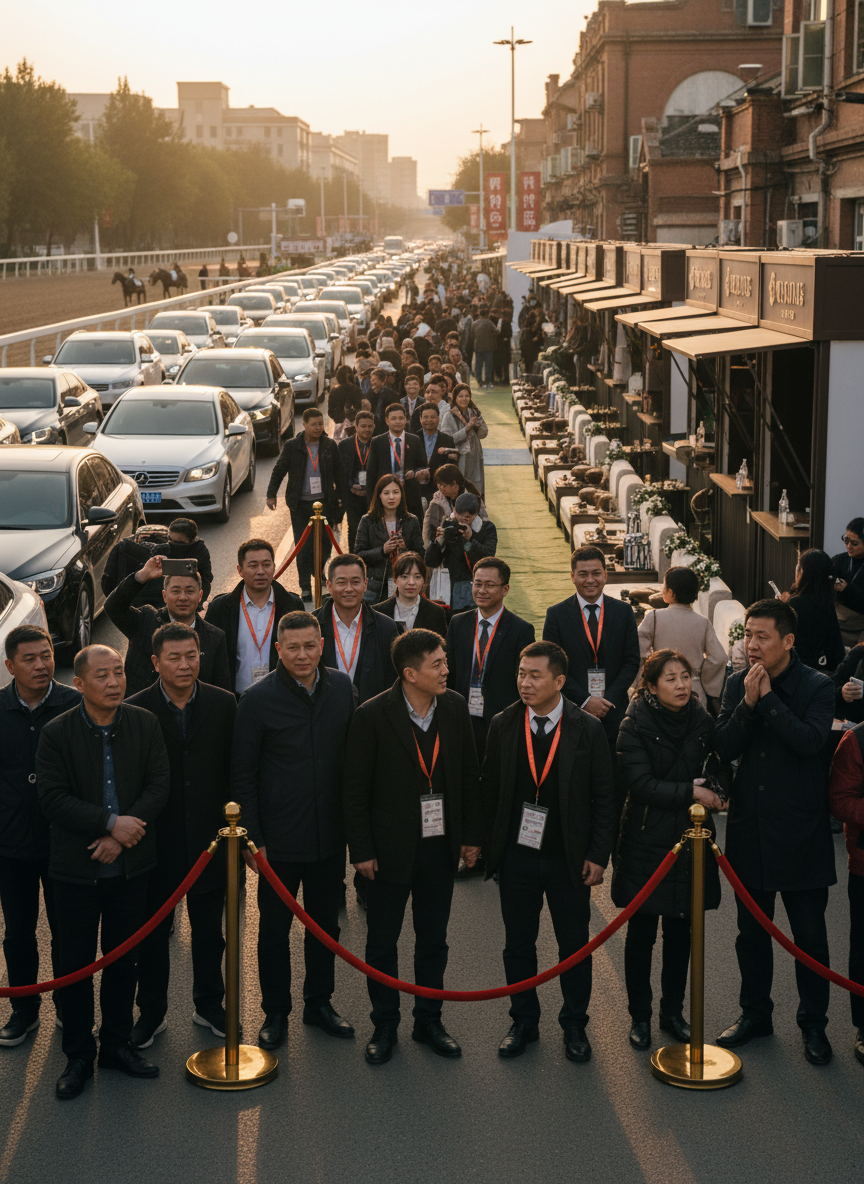
Local Discontent Rises Over Outsider Focus at Furong Road Festivals in Hannan District
1/17/2026 OSpark
OSparkRecent high-profile festivals on Furong Road in Wuhan’s Hannan District have sparked frustration among local residents, who report feeling sidelined in favor of visitors from outside the area. Despite being branded as community-focused events, features such as VIP seating, preferred access, and enhanced amenities appear to cater primarily to outsiders. Meanwhile, residents experience increased congestion, limited access, and minimal direct benefit, triggering debate about the core mission of these festivals and the inclusivity of their organization.
Festivals organized along Furong Road in Wuhan’s Hannan District, including the recent Wuhan Horse Racing Festival and large-scale food bazaars, have drawn significant attendance and media attention. Promoted as key events for community engagement and economic development, these festivals are frequently marketed under banners such as “leisure capital,” highlighting Hannan’s aspirations for vibrancy and cultural prominence.
Observations from recent events indicate that the primary beneficiaries of enhanced experiences—such as VIP access, prime seating, and first-choice food stalls—have largely been visitors from outside the local community. Outsider-focused hospitality and highlight treatments, including reserved areas and exclusive activities, have led to perceptions among Hannan residents of being relegated to the margins during events staged within their own district.
Simultaneously, infrastructure challenges, particularly severe traffic congestion and parking difficulties on Furong Road during festival periods, have exacerbated local frustrations. Residents report difficulty accessing the festival venues and local amenities, with some finding themselves unable to participate fully in activities advertised for broad public enjoyment. These logistical issues have further fueled a sense of exclusion.
Local stakeholders have raised questions about decision-making priorities and event management strategies. Criticisms focus on whether the needs and interests of Hannan residents are being adequately considered during the planning and execution of festivals. Public forums and social media discussions reflect a growing demand for more inclusive policies, transparent communication, and equitable sharing of benefits generated by such events.
The controversy highlights a broader cultural and administrative debate regarding the balance between attracting outside tourism and fostering genuine community participation. As Hannan District continues to host prominent festivals, increased attention to local access, stakeholder engagement, and the distribution of benefits will likely shape future event models and policy directions.


