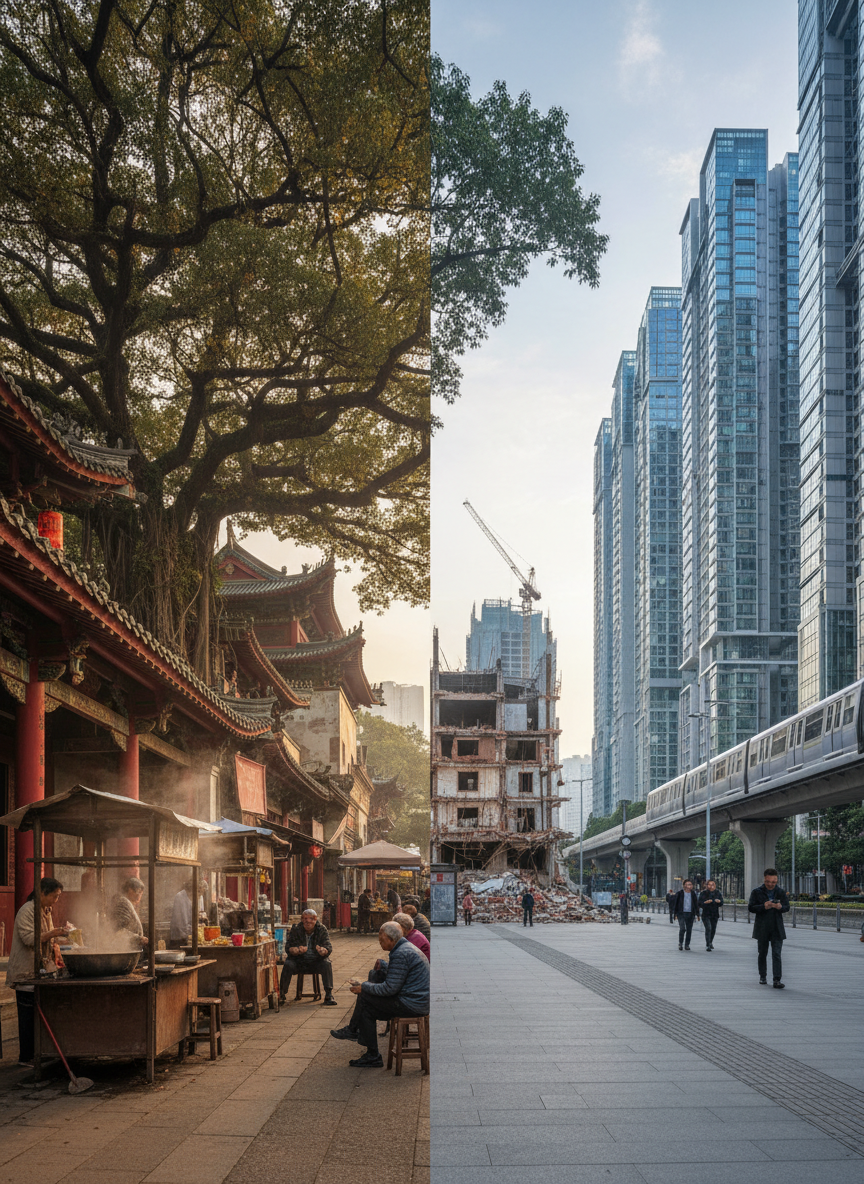
Transformation and Heritage Loss on Antuoshan 9th Road: The Changing Face of Xiangmihu
1/17/2026 OSpark
OSparkAntuoshan 9th Road in Xiangmihu, once known for its green spaces and vibrant local culture, has undergone rapid urban redevelopment, raising concerns about the erasure of its historic charm and communal identity. Long-standing communities, traditional temples, and local businesses have been replaced by high-rises and modern infrastructure. This transformation has prompted debates over the balance between progress and the preservation of heritage.
Antuoshan 9th Road, located within the Xiangmihu district, reflects significant urban transformation over recent years. This area, once identified by its tranquil green spaces and close-knit local communities, has experienced rapid redevelopment characterized by the construction of high-rise buildings and the introduction of modern amenities. The pace and scale of these changes have become subjects of public concern, particularly regarding the preservation of the neighborhood’s historical identity.
Historically, Antuoshan 9th Road was distinguished by traditional temples, bustling noodle stalls, and communal interactions under banyan trees. These elements fostered a distinct cultural atmosphere and a sense of belonging among residents. However, urban upgrades and infrastructural projects have resulted in the replacement of many of these features with contemporary glass structures and standardized public transportation facilities. Locals have expressed feelings of loss as the street’s unique historical and cultural character appears to be vanishing amidst extensive modernization.
Municipal authorities have promoted these changes as necessary components of urban progress, citing improved infrastructure, increased housing capacity, and the economic benefits associated with development. Despite these official positions, ongoing discourse questions whether such progress equates to genuine communal advancement or if it undermines the region’s social fabric and collective memory. The debate centers on the tension between modernization and heritage preservation, as residents observe the diminishing presence of cultural landmarks and traditional neighborhoods.
Community discussions emphasize a desire to balance modern growth with the retention of cultural and historical roots. The transformation of Antuoshan 9th Road serves as an example of broader trends occurring in rapidly urbanizing cities, where development is often accompanied by the risk of eroding local identities. The experience of Xiangmihu underscores the importance of thoughtful urban planning that acknowledges both the aspirations for modernization and the value of historical continuity.


