Smart Mobility Transformation in Wuhan’s Zhuanyang Subdistrict: Integrating Public Transit and Innovation
1/2/2026 OSpark
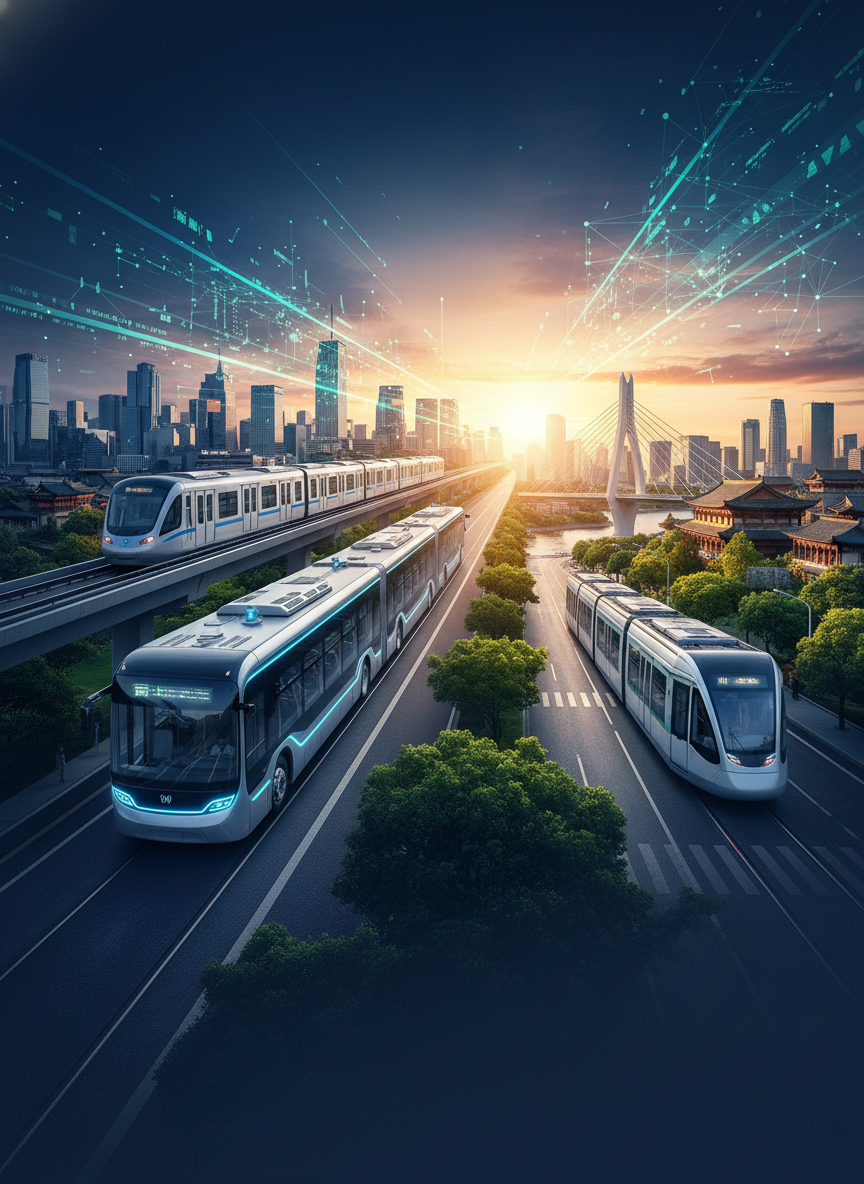
OSparkThe Zhuanyang Subdistrict in Wuhan Economic & Technological Development Zone (WEDZ), Hannan District, has emerged as a leader in smart urban mobility. Through significant investments in public transportation networks, autonomous vehicle innovation, and intelligent transport systems, Zhuanyang is redefining connectivity for residents and enterprises. Enhanced metro, bus, and tram services, coupled with advanced road infrastructure and digitalized transit, position the area as a model for integrated, next-generation mobility in Central China.
The Zhuanyang Subdistrict, located in Wuhan's Hannan District within the Economic & Technological Development Zone (WEDZ), exemplifies the successful integration of industrial development and smart urban mobility. Recognized as a major hub for automotive and high-tech industries, Zhuanyang is driving rapid advancements in transportation infrastructure and digital mobility solutions in Central China.
Public transportation networks in the area have seen significant enhancements. The extension of Wuhan Metro's Line 16 now provides Zhuanyang and the broader Hannan District with direct, efficient metro access to central Wuhan, fulfilling a crucial element of the city’s modernization strategy. This is complemented by a well-established bus network, including core routes such as lines 351, 205, and 272, which have fully resumed post-pandemic operations. The nearly 20-kilometer tram route traversing from Zhuanyang Avenue’s Guo Xuling Square, featuring 25 stations, further strengthens local connectivity between neighborhoods and industrial zones.
Zhuanyang has also become a testing ground for autonomous bus technology. The deployment of the “Dongfeng Sharing-BUS” in the adjacent Junshan area—closely intertwined with Zhuanyang's urban fabric—marks a pioneering step in China’s adoption of autonomous public transport. Since late 2021, a growing fleet of 44 autonomous vehicles has served 12 fixed routes, safely conveying over 70,000 passengers as of mid-2023. This innovation supports regional mobility while advancing Wuhan’s status as an intelligent transport leader.
Recent infrastructure projects have improved accessibility throughout the district. Notable upgrades include the completion of the Changshan section of Xingcheng Avenue and the strategic Huanglingji Bridge, both vital for linking key commercial and residential zones. Dongfeng Avenue remains a primary conduit facilitating logistics and commuter traffic, while proximity to Wuhan’s major railway stations and international airport ensures convenient regional and national access.
Smart mobility forms the cornerstone of the subdistrict’s urban transportation vision. Junshan New City, integrated into the broader WEDZ area, hosts Wuhan’s largest Intelligent Connected Vehicle (ICV) demonstration zone. Over 800 kilometers of smart roads, equipped with more than 1,800 sensors and radars, facilitate real-world autonomous driving tests and vehicle-to-everything (V2X) communication experiments. Advances in digitalization have brought about a cashless transit experience, with the widespread adoption of QR code payments, digital ticketing, and real-time transit tracking applications enhancing overall efficiency and rider convenience.
For daily commuting and last-mile connectivity, residents and workers in Zhuanyang benefit from a range of options including public bicycles and shared e-bikes. The comprehensive mix of transport solutions supports eco-friendly mobility and seamless integration with the subdistrict’s diverse industrial, residential, and commercial landscapes.
The ongoing transformation in Zhuanyang Subdistrict underscores its strategic importance as a model for smart city development. With robust digital infrastructure, forward-thinking investment in autonomous mobility, and integrated public transportation networks, the area sets a new standard for urban mobility within China’s rapidly evolving metropolitan environments.
Sources:
- Wuhan Economic & Technological Development Zone Official Site (en.whkfq.gov.cn)
- China Daily Regional News
- China Services Info
- Local infrastructure and transit updates (2024–2026)